Your therapy keeps going between sessions.
Patients practice between sessions, following a plan their therapist set. Every attempt goes back to the therapist, who decides what happens next.
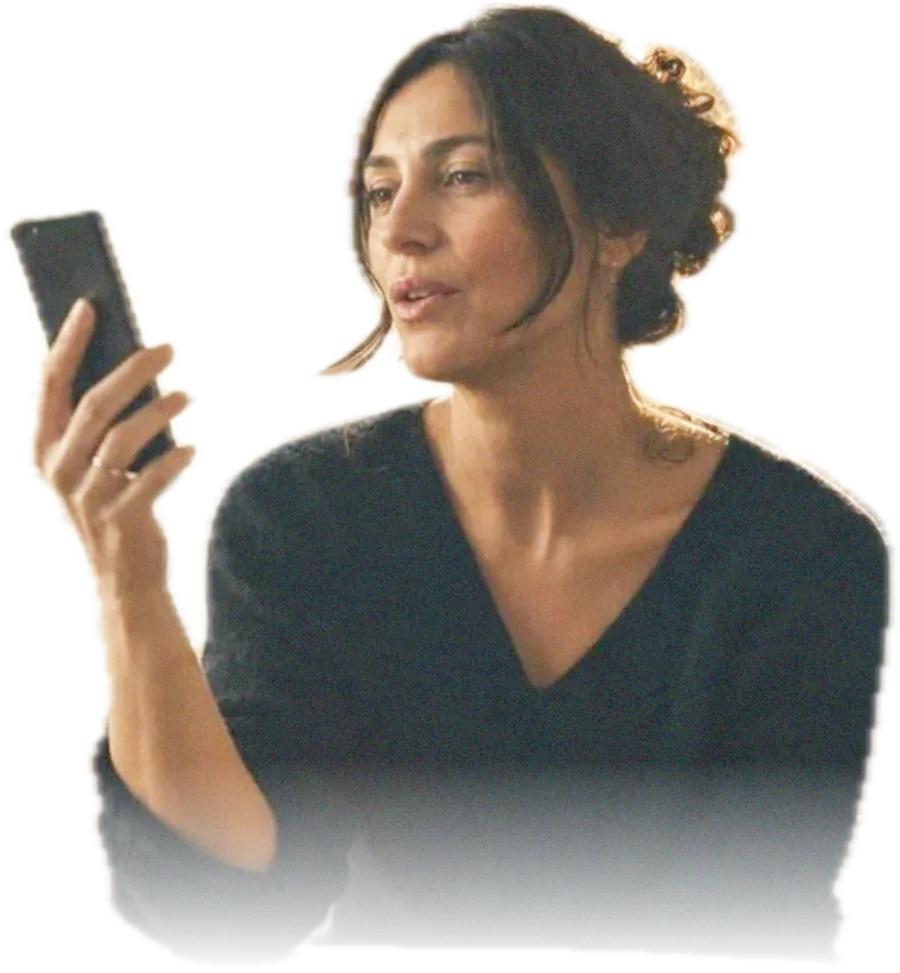
Between the sessions
Most of therapy happens when nobody is watching.
One hour in the clinic, then six days on their own. The part that decides whether therapy works is the part the clinician never sees.

The session. Everything works in the room.

Alone with the handout. No idea if it is going right.
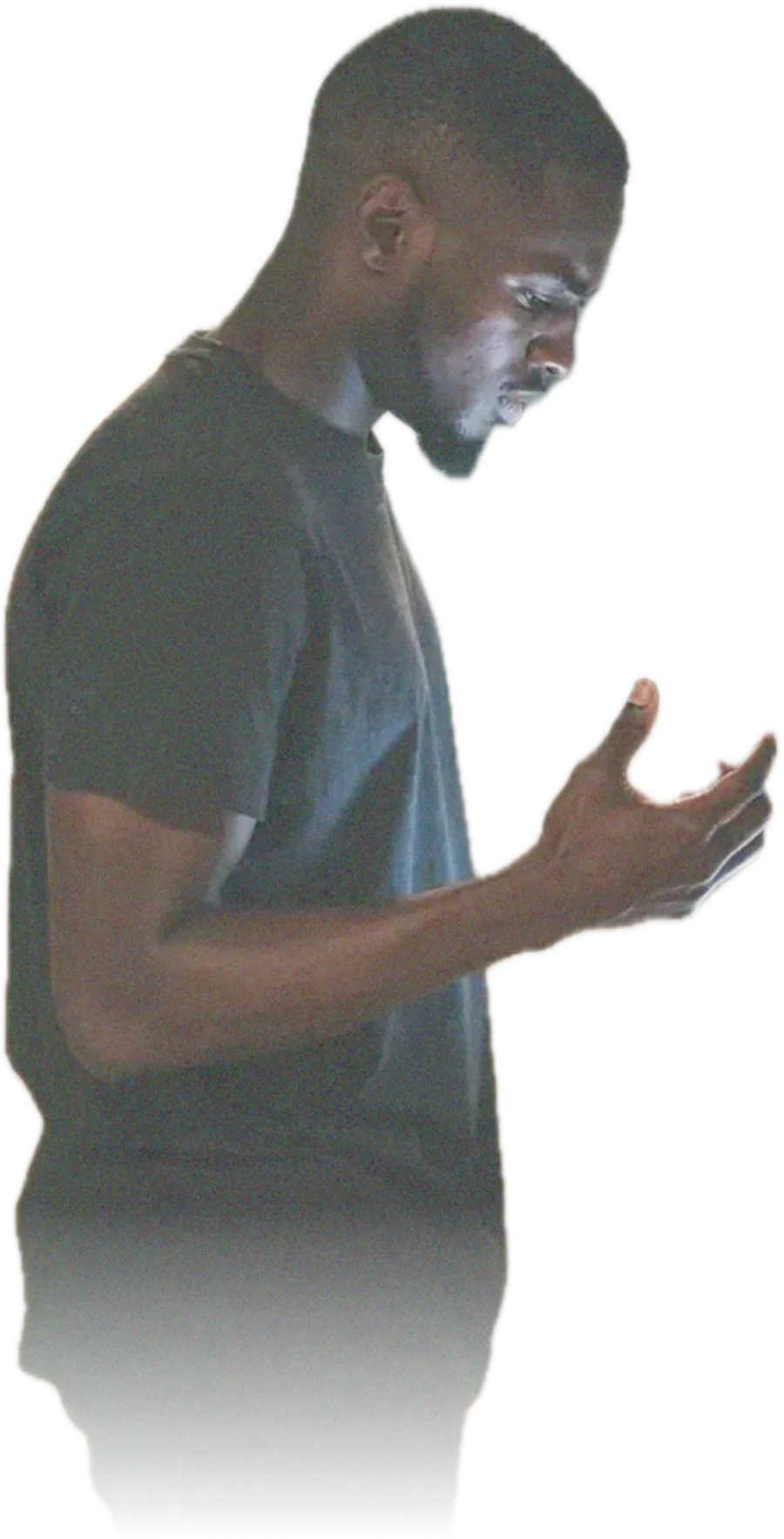
The phone rings. He lets it ring out.

So, how did the week go? Nobody really knows.
A Tuesday
Most of the work is not the session.
Three clinicians told us the same thing: hours spent preparing, hours spent writing up, and time inside the session lost to taking notes. This is that day with UpSpeech in it.
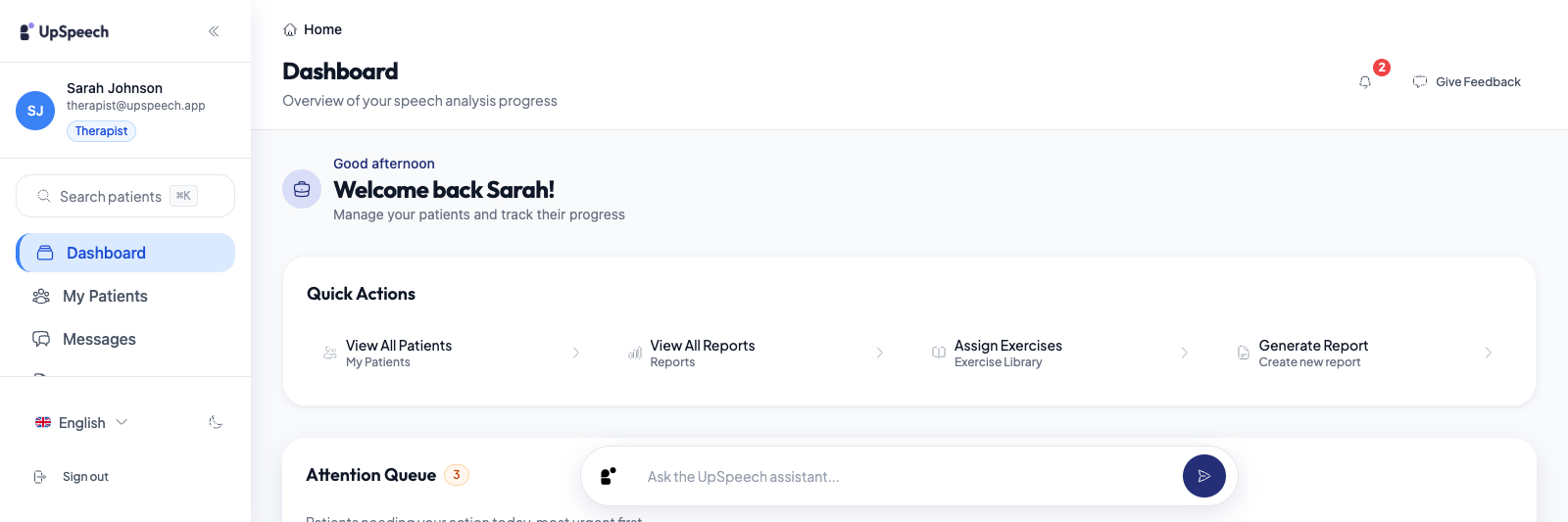
You already have the context.
The patient completed their onboarding in the app. You read where they are before they sit down, instead of spending the first ten minutes asking.

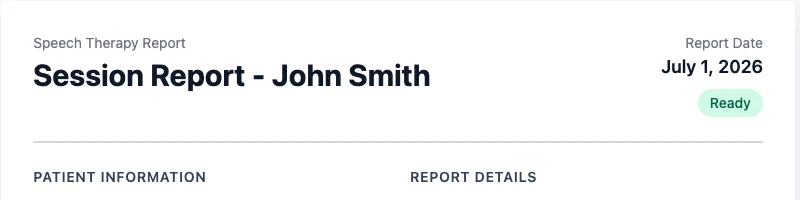
You walk out with it written.
Record the assessment and the report is drafted by the time you stand up. You correct it and you sign it. You do not start from an empty page.
Notes cost you the child.
Every minute you spend writing is a minute they spend somewhere else. Record the session instead, and the notes are waiting for you when it ends.
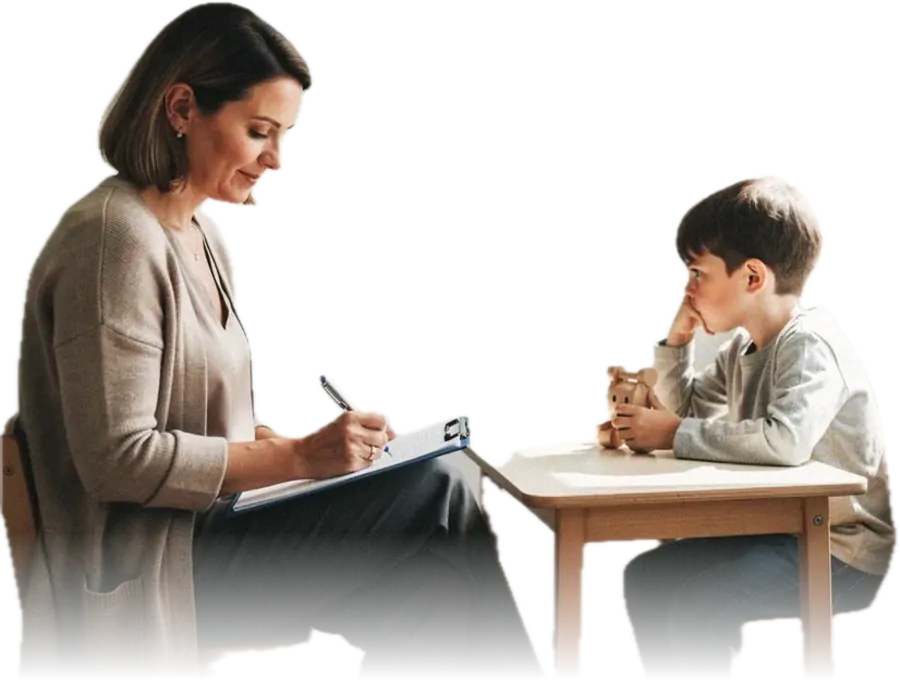
Your attention is on the page. Theirs went to the window a while ago.
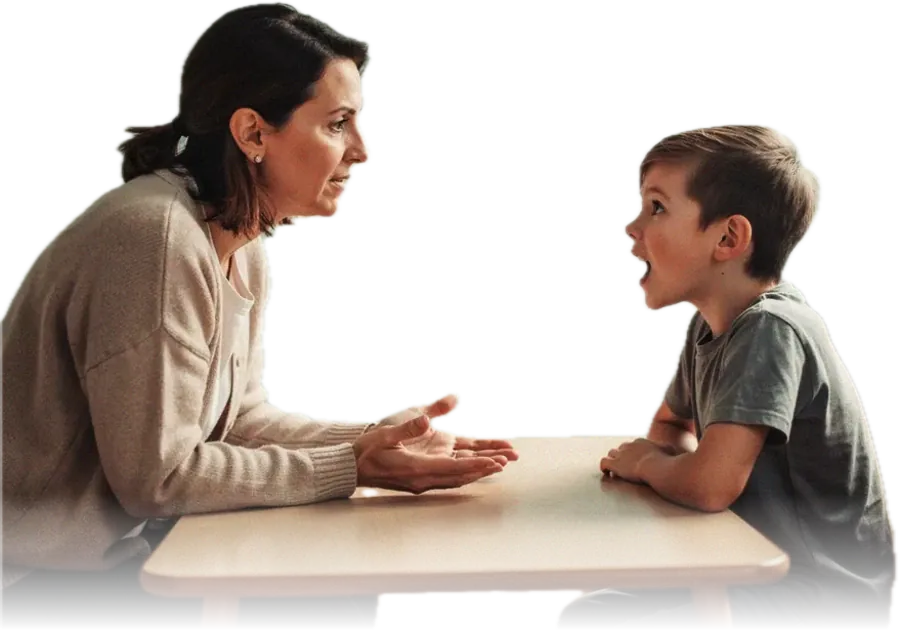
Nothing to write down. You are looking at each other, and he is the one talking.
The plan goes home with them.
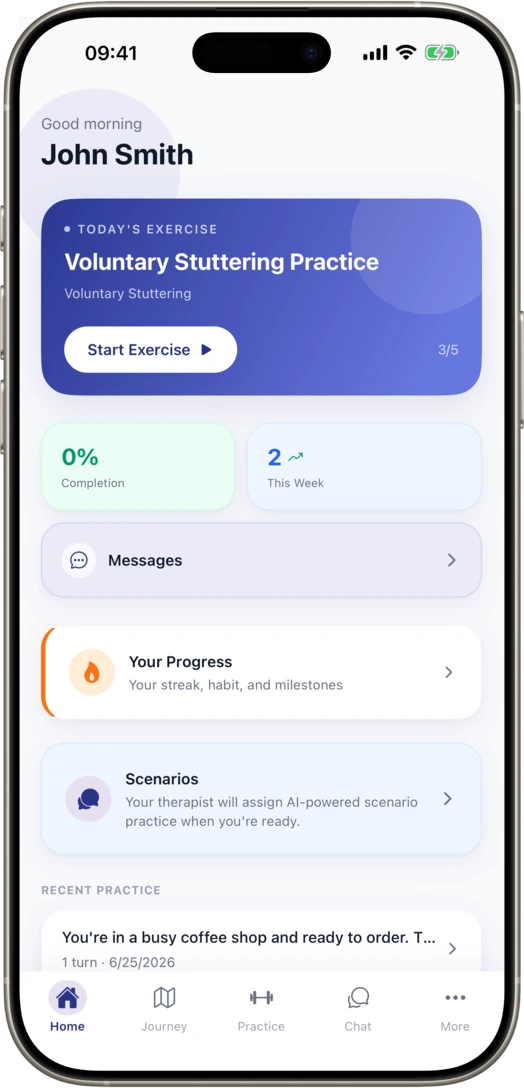
Assign the exercises once. They practice between visits, and every attempt comes back for you to review before the next appointment.
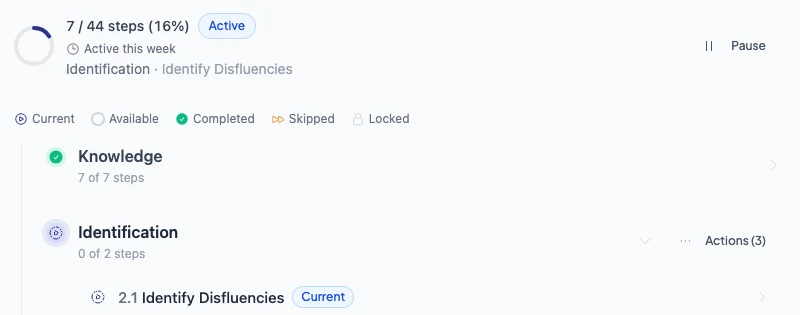
You remember all of them.
Six patients, back to back. By the evening the detail has gone. The record has not, and it is what the next session starts from.
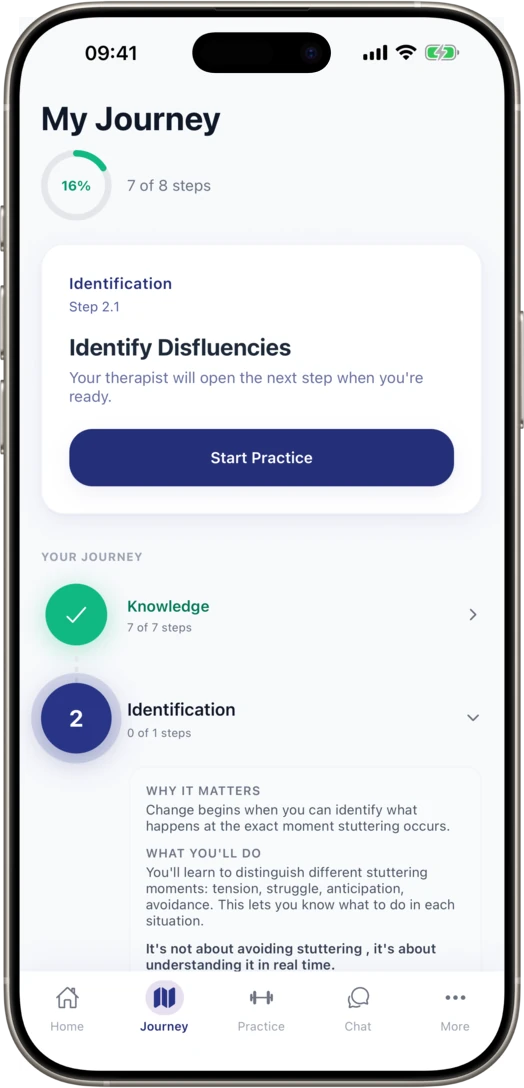
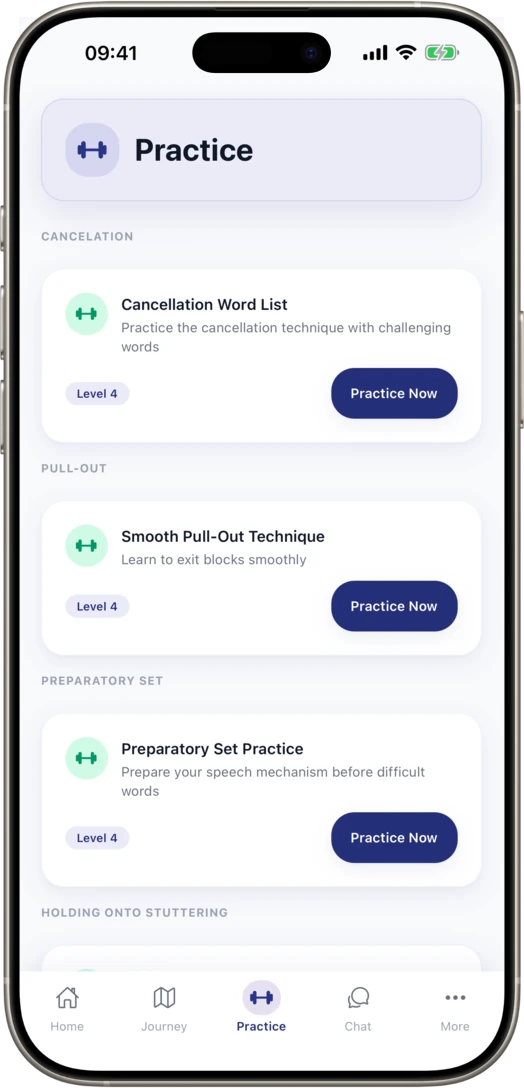
The practice happens in the app, between sessions.
Patients work through the plan their therapist set from their phone, between sessions, and the therapist can see how it is going.
Younger patients

The loop
Every step reviewed by a clinician.
AI drafts the session report.
The session recording and notes turn into a structured draft.
Continuous support,
starting with your clinic.
UpSpeech Labs
Trained on
clinician-annotated data.
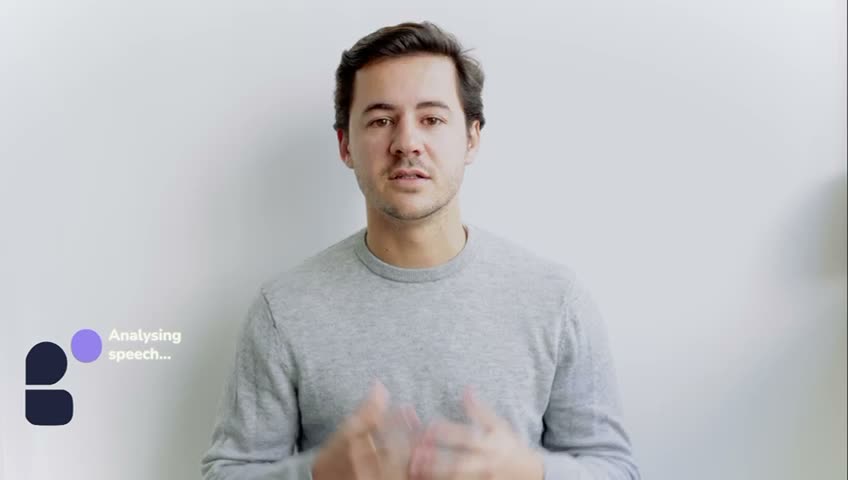
We built our own annotation tool, and practicing speech-language pathologists use it to tag disfluencies frame by frame.
Foundations
Clinical practice and AI engineering,
in the same team.
Clinicians and engineers work side by side. The speech-language pathologists who use the platform with patients review the product decisions we make.
Co-development partner

AI infrastructure grant
Security and data
How patient data is handled.
Clinics trust us with sensitive recordings. We treat that data the way a clinic would, and a therapist always has the final say on what the AI produces.
Per-organization isolation
Every clinic's data is kept separate by organization. One organization can never see another's patients or recordings.
Encrypted in transit and at rest
Data travels over TLS, and recordings and databases are encrypted while stored.
Hosted in the EU
Our servers and file storage are in the European Union, and we handle personal data under the GDPR.
Private recordings
Recordings are served through short-lived, signed links, never from a public location.
Improving the AI, with consent
Recordings are used to improve our models only where the patient has opted in. Identifying details are removed first, the recordings stay inside UpSpeech, and a patient can withdraw at any time.
Request early access.
We're working with a cohort of clinics and would like to hear from others working in speech therapy. Tell us about your practice and we'll be in touch.